The Los Angeles Rams didn’t just reach for a quarterback—they responded to a long-simmering problem with precision. When news broke that they’d selected Oregon transfer and former Alabama quarterback Ty Simpson in the later rounds of the draft, reactions ranged from puzzled to intrigued. But according to veteran NFL insider Albert Breer, the move wasn’t impulsive. It was part of a calculated, intelligence-driven draft strategy that reflects how modern franchises now approach quarterback development. Breer’s takeaways reveal a deeper framework: one where athletic upside, coaching alignment, and long-term roster planning outweigh immediate ceiling.
Breer, known for his league-wide access and nuanced understanding of front-office psychology, didn’t view the Simpson pick as a reach. Instead, he framed it as a classic Rams-style investment—low-risk, high-upside, and highly coachable. That distinction is critical. In a league where drafting QBs has become a high-wire act of projection and patience, the Rams didn’t bet the farm. They planted a flag.
The Rams’ Quarterback Dilemma: More Than Just a Gap For years, the Rams have danced between stability and uncertainty under center. Matthew Stafford remains the starter—when healthy. But his injury history, coupled with a declining window at age 35+, forces LA to plan beyond the present. Bryce Young, their previous developmental project, didn’t pan out. P.J. Walker was a bridge, not a destination.
Enter the need for a new developmental blueprint. Not every team can swing for the fences in the first round. The Rams, capped by cap constraints and recent trades, needed a different model—affordable, moldable, and armed with raw tools that coaching could refine.
That’s exactly where Ty Simpson fits.
According to Breer, Simpson’s blend of athleticism, arm talent, and intangible competitiveness made him a “sneaky desirable” profile late in the draft. “He’s not the most polished, but he’s the kind of guy coaches fall in love with,” Breer noted in his post-draft breakdown. “He runs like a track athlete, throws with velocity, and has that ‘never say die’ edge.”
Albert Breer’s Draft Lens: Why Process Matters More Than Hype
Breer’s analysis doesn’t chase headlines. He digs into process—the how, not just the what. And in the Rams’ case, he highlighted three under-the-radar elements that shaped their decision:
- Offensive Scheme Alignment
- Sean McVay’s offense has evolved. While it was once heavily reliant on short-to-intermediate precision, it now incorporates more RPOs, boot-action, and designed movement—hallmarks of the modern spread game. Simpson thrived in similar systems at Alabama and Oregon. His ability to operate from pistol, read safeties on the move, and make off-platform throws aligns with McVay’s current vision.
- Coaching Development Track Record
- The Rams have quietly built one of the NFL’s best quarterback development infrastructures. Offensive coordinator Mike O’Neill has worked extensively with young arms, and quarterbacks coach Chris Weinke has a history of refining raw talent. Breer pointed out that LA’s ability to “teach mechanics, not just install plays” was a decisive factor. Simpson’s inconsistent footwork and timing can be ironed out—especially with modern biomechanical training tools now embedded in the Rams’ facility.
- Injury Resilience and Athletic Upside
- Breer emphasized Simpson’s clean injury history and elite testing metrics. At the Combine, Simpson posted a 4.41 40-yard dash, 39.5” vertical, and 10’1” broad jump—numbers that rival top-tier athlete QBs like Jalen Hurts and Anthony Richardson. In a league where mobility is now non-negotiable, that profile has long-term survival value.

“The Rams aren’t drafting him to start Week 1,” Breer said. “But they are drafting him to be ready when the window reopens.”
How the Rams Identified Simpson: A Talent Evaluation Case Study
The Rams didn’t stumble onto Simpson. They scouted him methodically—starting with his high school days at Westview in Tennessee, tracking his development at Alabama, and reviewing his transfer film at Oregon.
Breer revealed that the Rams’ personnel team conducted over 15 hours of film study on Simpson, focusing not just on his stats (which were modest: 971 yards, 6 TDs, 3 INTs in 2023), but on processing speed under pressure and spatial awareness in mesh concepts.
One telling example: a third-and-long play against Washington in the Holiday Bowl. Simpson faked a handoff, read the linebacker’s flow, and fired a laser to the sideline for a first down—while rolling right and avoiding a sack. The Rams’ scouts graded that single play as “QB1-level decision-making.”
They also valued his leadership intangibles. Teammates at both schools consistently described him as “the hardest worker in the room.” Former Alabama QB Jalen Milroe called him “the guy we all looked to in practice.” That kind of internal credibility—often invisible to casual observers—is gold for franchises building culture.
Why the Late-Round Gamble Makes Sense
Simpson went undrafted in some mock scenarios. But the Rams snagged him in the seventh round—a pick that cost them no premium capital. That’s crucial.
Breer stressed that the Rams’ approach mirrors the model used by teams like the 49ers with Brock Purdy and the Dolphins with Skylar Thompson: develop without desperation. These aren’t “project” picks in the traditional sense. They’re calculated picks—low-cost bets on traits that coaching can maximize.
Consider the financial math: - Seventh-round picks earn around $800K in base salary over four years. - They don’t count against the team’s “Top 51” cap until they’re active. - If they fail? Minimal loss. - If they develop? You’ve hit a home run.
With Stafford due to make $27M in his final contract year, the Rams needed options that didn’t require immediate playing time or cap allocation. Simpson fits that perfectly.
Compare this to teams that overpay for mid-tier QBs in free agency—like the Giants with Daniel Jones or the Raiders with Jimmy Garoppolo. The Rams avoided that trap. They’re playing the long game.
What Simpson Brings That Other Prospects Don’t
While comparisons to Bryce Young or Jayden Daniels draw headlines, Breer argues Simpson offers something different: unconventional athlete DNA with a coachable mindset.
Let’s break it down: - Arm Talent: Not elite, but improved significantly in 2023. His velocity on deep outs and comebacks is NFL-ready. - Mobility: Elite-level. He forces defenders to account for him as a runner, opening lanes for play-action. - Processing: Still developing, but shows flashes. His decision-making in two-minute drills at Oregon was surprisingly crisp. - Mental Toughness: Played in high-pressure environments—Nick Saban’s Alabama, a transfer to a Pac-12 contender.
What he lacks in experience, he makes up for in adaptability. Breer pointed out that Simpson’s willingness to learn—evident in his film review habits and voluntary offseason training—suggests he’ll respond well to coaching. “You can’t teach work ethic,” Breer said. “And he’s got it in spades.”
The Road Ahead: What the Rams Must Do Now
Drafting Simpson is just step one. The real challenge begins in Thousand Oaks.
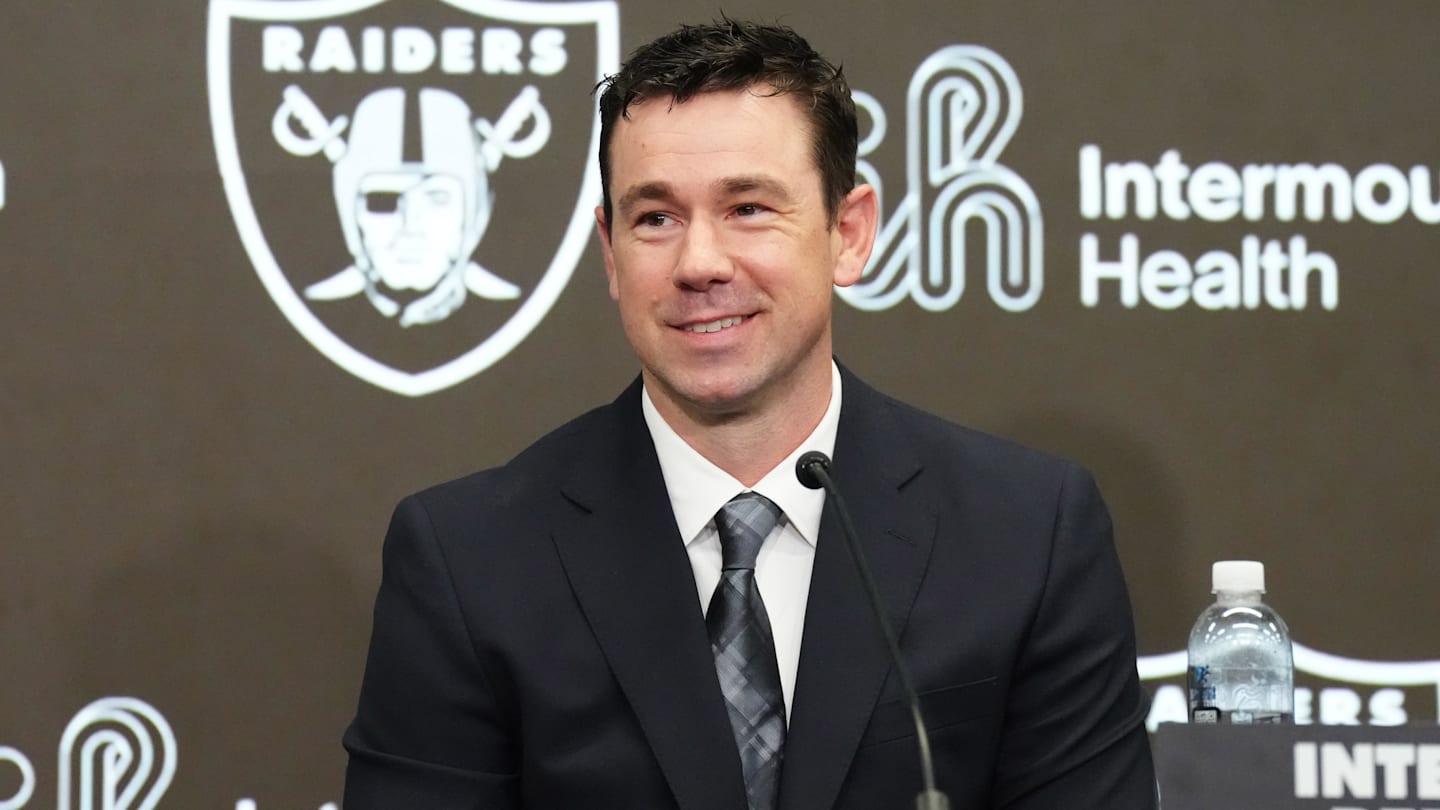
Breer outlined a three-phase development plan the Rams should follow:
- Year One: Learning and Weighted Reps
- Simpson should spend his rookie season on the practice squad or as QB3. He’ll absorb the playbook, work on footwork, and refine his timing. The Rams should limit live reps in preseason—better to preserve him than risk injury.
- Year Two: G League-Style Development
- If the Rams launch a partnership with a spring league (like the UFL), Simpson could get starter-level reps without NFL risk. Breer has long advocated for NFL teams to create “development affiliates.” This would be the ideal sandbox.
- Year Three: Competition for Backup Role
- By 2026, with Stafford likely retired or transitioned, Simpson should be ready to compete with whoever the Rams sign or draft. If he’s improved mechanically and mentally, he could even push for the starter job.
The key? Patience. Breer warns against fast-tracking Simpson. “Too many teams ruin young QBs by rushing them. The Rams have time. They should use it.”
A Smarter Way to Build at QB
The Rams’ decision to draft Ty Simpson isn’t a headline-grabber. But as Albert Breer’s analysis shows, it’s a textbook example of modern quarterback evaluation: data-informed, process-oriented, and built for sustainability.
They didn’t overpay. They didn’t panic. They identified a player with rare athletic tools, a coachable mind, and a competitive engine—and they got him at a discount.
That’s not luck. That’s elite scouting.
For fans frustrated by recent QB misfires, Simpson represents a new philosophy: not every answer has to come in the first round. Sometimes, the best picks are the ones barely anyone notices—until they start winning.
Now, it’s on the Rams’ coaching staff to develop him. And on Simpson to prove that raw potential, when nurtured the right way, can become something real.
#### Final Thought The NFL draft isn’t just about finding talent. It’s about fitting pieces into a system. The Rams didn’t just draft Ty Simpson. They drafted a specific type of quarterback—one that aligns with where the league is going, not where it’s been. Thanks to insights from Albert Breer, we can see the method behind the move. Now, we wait to see if it works.
FAQ
Why did the Rams pick Ty Simpson so late? Simpson was seen as a developmental project with raw tools but limited starting experience. Most teams passed due to his lack of production, making him available late.
Is Ty Simpson a starter-caliber QB? Not immediately. But with his athleticism, work ethic, and coaching, he has the traits to develop into a backup or even a rotational starter.
How does Albert Breer know so much about the Rams’ process? Breer has deep sources within NFL front offices and coaching staffs, giving him access to internal evaluation methods and draft-room thinking.
Can Simpson beat out the current Rams QBs? Not in the short term. Matthew Stafford is the starter, and the Rams may add another veteran. Simpson’s path is long-term development.
What makes Simpson different from other mobile QBs? His blend of elite speed, arm strength, and competitive toughness stands out. He’s not just a runner—he’s a playmaker who thrives under pressure.
Did Simpson’s transfer to Oregon hurt his draft stock? Partially. He didn’t start at Oregon, which limited his exposure. But his practice reps and leadership were valued by teams like the Rams.
What’s the biggest risk with Simpson? His inaccuracy on intermediate throws and inconsistent footwork. If coaching can’t fix those, his ceiling drops significantly.
FAQ
What should you look for in Albert Breer’s NFL Draft Takeaways: How the Rams Landed on Ty Simpson? Focus on relevance, practical value, and how well the solution matches real user intent.
Is Albert Breer’s NFL Draft Takeaways: How the Rams Landed on Ty Simpson suitable for beginners? That depends on the workflow, but a clear step-by-step approach usually makes it easier to start.
How do you compare options around Albert Breer’s NFL Draft Takeaways: How the Rams Landed on Ty Simpson? Compare features, trust signals, limitations, pricing, and ease of implementation.
What mistakes should you avoid? Avoid generic choices, weak validation, and decisions based only on marketing claims.
What is the next best step? Shortlist the most relevant options, validate them quickly, and refine from real-world results.